

Updraft: Parachutes, Gliders & Balloons
Adds wingsuits, hang gliders, paragliders, parachutes, and hot-air balloons with wind, thermal, and ridge lift gliding physics.
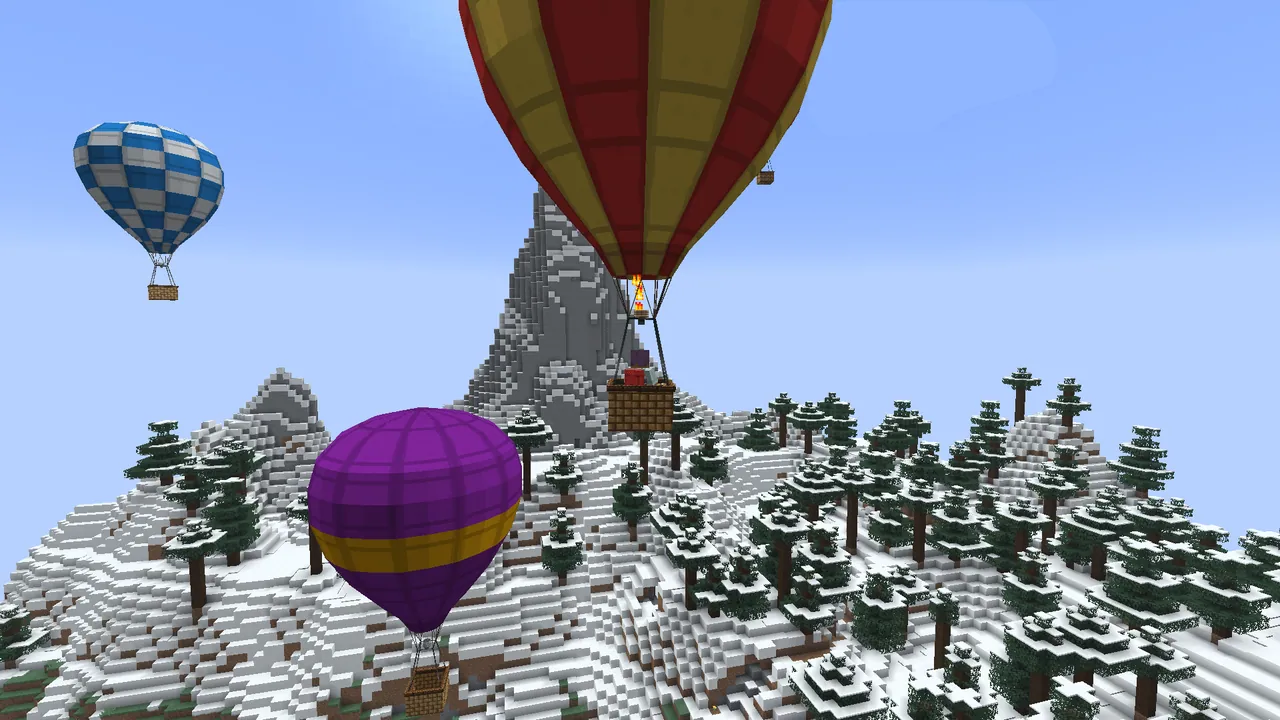
Aviation Gear and Flight Mechanics
Updraft introduces multiple types of aircraft, ranging from personal wingsuits and parachutes to hot-air balloons, gliders, and powered paramotors, which interact with a simulated wind system. Parachutes come in four distinct varieties: the self-opening Round Parachute, the steerable Sport Rig equipped with a reserve, the rapid-deploying BASE Rig for low cliffs, and the fast Swoop Rig. When deploying a parachute, a pilot chute extracts the bag and stretches the lines before the canopy inflates, and a dynamic warning calculates your speed and equipment to indicate the final safe moment to pull. Parachutists can steer, brake, dive using front risers, flare prior to landing, and resolve rare malfunctions like line twists or spiraling mains by cutting away to a reserve.
Wingsuits allow players to leap from cliffs and press Jump to glide horizontally over long distances. For example, jumping from a 150-block peak yields a flight covering several hundred blocks, during which looking down increases speed and looking up slows the descent. Flying near terrain awards proximity points, and passing through tight gaps provides a bonus, though a parachute is mandatory to land safely.
Hang gliders, paragliders, and paramotors offer sustained unpowered and powered flight options. Constructed from bamboo, canvas, and breeze rods, hang gliders provide glide ratios ranging from 7:1 to 13:1 and launch by running off high ground or pressing Jump in midair. Paragliders require laying out the wing on a slope, raising it overhead, and running to take off, allowing pilots to ascend in sunlit thermals, perform wingovers, or pull big ears for a rapid descent. For flat-ground launches, the paramotor climbs using carried coal, charcoal, blaze powder, or dried kelp as fuel.
Hot-air balloons carry up to four passengers to a high-altitude ceiling near y=1560, functioning as both transport and mobile skydiving platforms. The pilot manages slow-reacting heat lift by firing the burner and opening the vent, steering indirectly by reading a panel that displays shifting wind directions at different altitudes.
Wind Simulation, Equipment, and World Generation
A dynamic weather system generates thermals, ridge lift, and altitude-dependent wind shifts that directly affect how every craft flies. Thermals form over dry, sunny terrain and drift downwind, while campfires and lava produce smaller, stronger updrafts. Wind pushes up the windward side of hills to create ridge lift, causes sink on the leeward side, increases in strength and changes direction with altitude, and turns gusty during rain or storms. Pilots track these conditions using a stationary Wind Sock, an active HUD arrow, an Altimeter, and a Variometer that beeps in rising air.
The Rigging Table serves as the central workstation for maintaining, repairing, and customizing flight gear. At this table, players pack canopies, replace main parachutes after a cutaway, toggle automatic opening, and apply two dye colors across six patterns to canopies, sails, suits, and balloon envelopes. Additional utility items include a Harness Kit to integrate rigs directly into chestplate armor, a Landing Target that scores touchdown accuracy, and a Jump Logbook containing jump records and a customized Flight Manual.
Equipment experiences wear over time without breaking mid-flight, and rare Abandoned Drop Zones generate on mountain peaks. Worn gear increases the chance of malfunctions, supports Unbreaking and Mending enchantments, and becomes temporarily heavy if landed in water. Explorers can find pre-generated gear chests, Rigging Tables, and wind socks at mountain drop zones, and track their progression across twenty-one flight advancements.
Controls and Flight Operation
Flight maneuvers rely on specific keybinds that can be rebound in the Updraft controls menu. All item tooltips automatically update to reflect your current key assignments, and the in-game Flight Manual inside the Jump Logbook documents your active controls.
- Press R while falling to deploy a parachute, or use R on the ground to lay out a paraglider.
- Hold V to cut away a malfunctioning main canopy, then press R to deploy the reserve parachute.
- Press Jump while falling to spread a wingsuit or launch a hang glider.
- Use A and D to steer horizontally, W for front risers, speed bar, or freefall tracking, and S to apply brakes, flare before landing, or open the balloon vent.
- Hold Jump to engage the paramotor throttle or fire the hot-air balloon burner.
- Press Sneak to execute a landing roll upon touchdown or to climb out of a hot-air balloon basket.
Configuration and Compatibility
The mod must be installed on both client and server, with identical equipment and flight physics across all supported editions. Running on Minecraft 26.3 requires Fabric API alongside a minimum of Fabric Loader 0.19.5. For Minecraft 1.21.1, players can use NeoForge starting from release 21.1.197, or play on Fabric by combining at least version 0.116.0 of Fabric API with Fabric Loader 0.16 or later. Additionally, Fabric users can optionally add Mod Menu to gain a configuration button inside their mod list.
Running the /updraft config command opens client and server customization options. Clients can adjust HUD placement, scale, measurement units, camera roll, field of view, screen shake, and a Reduced Motion mode. Server administrators can select between Arcade, Balanced, or Realistic presets, and toggle parameters for malfunctions, landing damage, wind and thermal intensity, equipment durability wear, phantom spawning, and allowed flight dimensions. Furthermore, all wings and balloons are data-driven, permitting flight characteristic adjustments via data packs.
Questions
Can I wear chest armor while using a parachute or glider rig?
Yes, you can use a Harness Kit to build a rig directly into any chestplate.
What happens if my flight gear loses durability during a flight?
Gear never breaks while you are flying, though worn gear malfunctions more frequently and can be enchanted with Unbreaking and Mending.
How do you steer a hot-air balloon?
Balloons cannot be steered directly; instead, the pilot uses the burner and vent to change altitude and catch wind currents that blow in different directions at different heights.
Can I land directly in a wingsuit?
No, landing in a wingsuit is not possible, so you must open a parachute before reaching the ground.
Related
A library mod and API that exposes vanilla elytra flight mechanics as an entity attribute for developers.
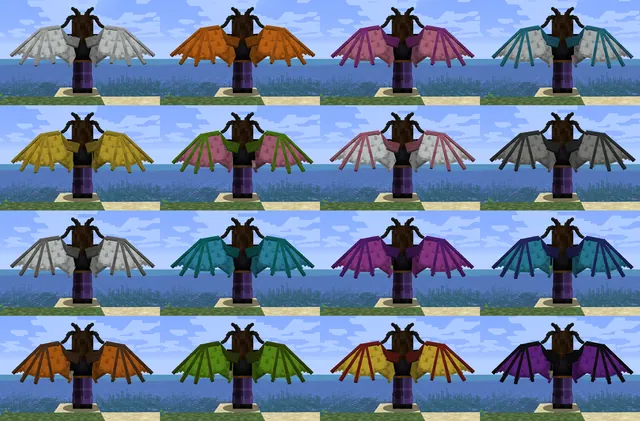
Adds craftable colorful wings worn in the Curios or Trinkets back slot that consume hunger while flying.
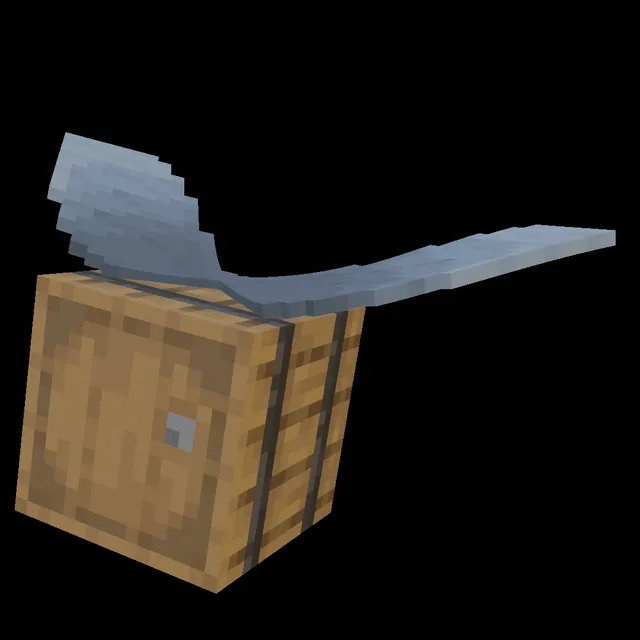
Overhauls elytra flight controls and camera movement with full pitch, yaw, and roll mechanics.

Adds tiered craftable gliders from wood to netherite as an early-to-mid-game alternative to the elytra.

Adds craftable hang gliders with wind mechanics and upgradeable speed for gliding through the skies.
Adds a craftable hang glider with wind physics as an early-game scenic flight alternative to the elytra.
A client-side camera mod that adds smooth perspective transitions and camera roll during elytra flight.
Adds cape-like movement physics to the elytra while worn on a player's back.